 Selection and application of DC-DC converter bricks
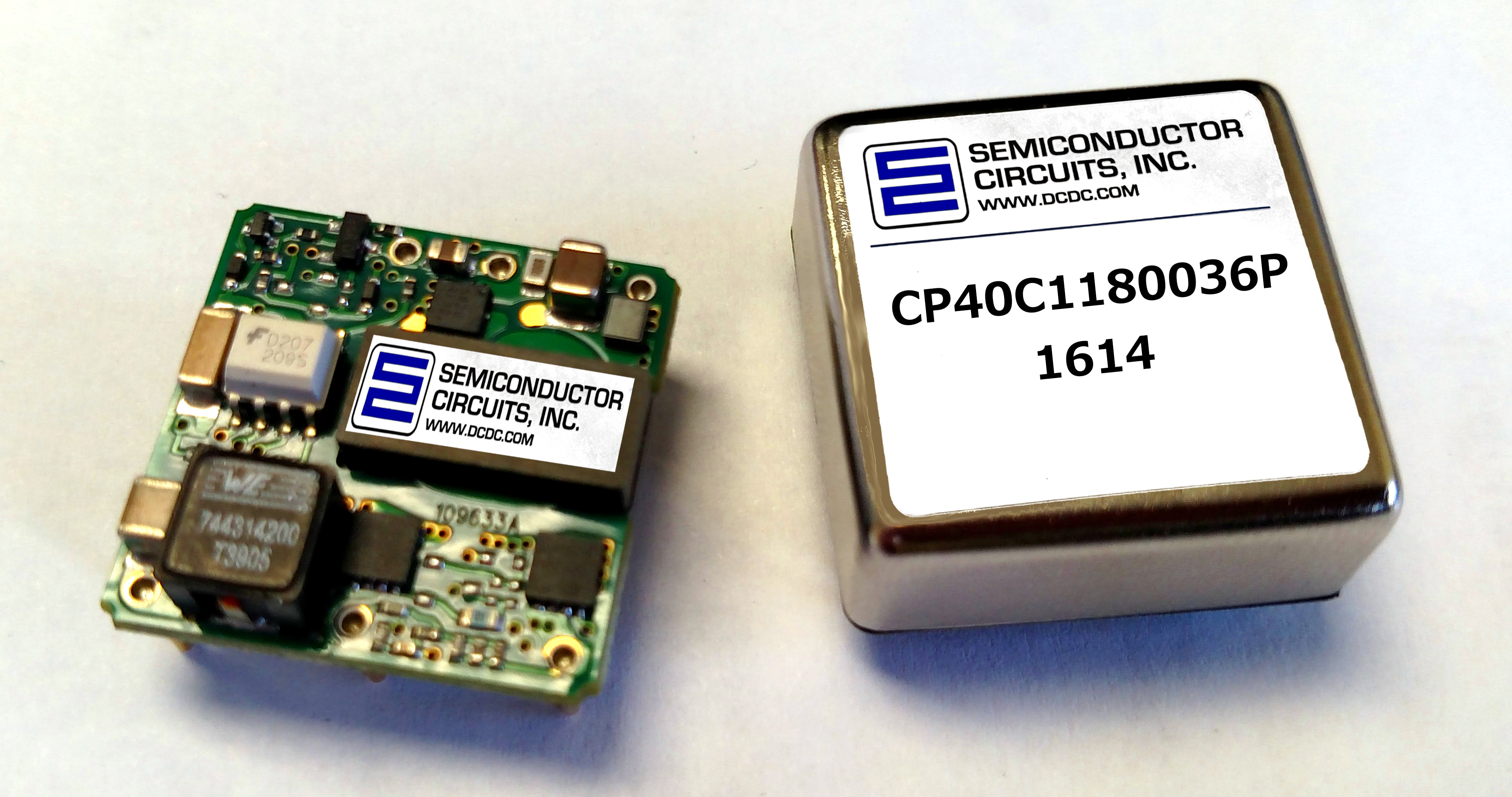 Flexibility in Design – Semiconductor Circuits CP-B 1×1 Product Series
Test Procedures
- Output Voltage Tolerance
- Apply the nominal rated DC input to the converter under test.
- While drawing the rated load current measure the output voltage of the converter under test.
The tolerance is the difference between the measured voltage (Vout) and the specified
output voltage (Vnom) expressed as a percentage of Vnom:(|Vout-Vnom|/Vnom)*100%.
- Line Regulation
- Apply the nominal rated DC input to the converter under test.
- While drawing the rated load current measure the output voltage of the converter under test. (Vnom)
- Apply the minimum rated DC input to the converter under test.
- While drawing the rated load current measure the output voltage of the converter under test. (Vlow)
- Apply the maximum rated DC input to the converter under test.
- While drawing the rated load current measure the output voltage of the converter under test. (Vhigh)
- Line regulation is the change in the output voltage as a result of the change in input voltage expressed as (|Vhigh-Vlow|/Vnom)*100%.
- Load Regulation
- Apply the nominal rated DC input to the converter under test.
- While drawing the full rated load current measure the output voltage of the converter under test. (Vfull)
- While drawing the minimum rated load current measure the output voltage of the converter under test. (Vmin)
- Load regulation is the change in output voltage as a result of the change of output load current expressed as (|Vfull-Vmin|/Vfull)*100%
- Ripple and Noise
- Apply the nominal rated DC input to the converter under test.
- Apply the full rated load current to the output of the converter under test.
- To measure the True RMS value connect an AC coupled True RMS voltmeter to the output.
- To measure the peak-peak value connect an ac coupled oscilloscope to the output.(be sure to properly
decouple the scope probe to insure an accurate measurement.)
- Efficiency
- Apply the nominal rated DC input to the converter under test. (Vin)
- Apply the full rated load current to the output of the converter under test.
- Measure the input current to the converter under test. (Iin)
- Calculate the input power (Pinput) to the converter expressed as Vin*Iin
- Measure the output voltage of the converter under test.
- Calculate the output power (Pout) being drawn from the converter under test expressed as Vout*Iout.
- Efficiency is ratio of output power to input power expressed as Pout/Pinput.